Tuesday, April 1, 2014

Getting Baptized Today

I'm sure my regular readers have noticed my lack of posts this past year. As I have mentioned quite a few times, having a baby has kept me quite busy and blogging always winds up pretty low on the list of things to do. But in addition to this, I have been on an extraordinary spiritual journey that is culminating today. I'm getting baptized!
An evangelical Protestant Baptism by submersio...
An evangelical Protestant Baptism by submersion in a river (Photo credit: Wikipedia)

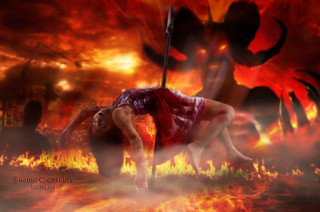
I know this might seem crazy, but trust me, having a child changes your perspective on everything. It's one thing to risk my soul ending up in an eternal state of torment and torture, but how can I risk my son's? What if he winds up in hell and it's my fault? I'll feel pretty bad then! I just couldn't let that happen.

burn in hell
burn in hell (Photo credit: tacit requiem (joanneQEscober ))
But it's not just wishful thinking, or fire insurance, I have very good reasons for this. The reasons have been there all along, somewhere deep down in my soul I knew it, I just knew, but some part of me was holding back. My atheists readers know this feeling, God is real, you know it, you just don't want it to be true and you suppress it. But God has single-handedly reached into my heart and taken this block away. I can now really see the truth (which again, on some level I saw it all the time). God is real, and he loves me, and all he wants in return is for me to acknowledge this love so he won't be forced to let me be tortured for all eternity.

So what are these reasons? How do I know for certain that God is real? It's such and easy question that I could go on and on for days about it. I have so many good answers that it's hard to even know where to start. In fact, putting it in writing doesn't seem to be the right medium as it really downplays the magnitude of what I am saying. I have decided that I will instead summarize my thoughts in a youtube video. Please go watch this video and you will be convinced! It's unimaginable that someone could see this amazing evidence and not become a Christian. If you are an atheist and you are afraid of changing your position, then by all means avoid my video, but if you have the slightest bit of courage go have a look.
Enhanced by Zemanta

Saturday, March 8, 2014

Exodus 13: A Pillar of Fire? Cool!

today's podcast

Previously:

After a swath of plagues from God, the Egyptians finally kicked the Israelites out of Egypt.

Consecration of the Firstborn (v. 1-2)

God says to consecrate the first born (among men and beasts) to him.

I'll be honest, I didn't know what the hell "consecrate" means. I had to look it up. Apparently it is just declaring something sacred. So in this case we are saying the firstborn is the most sacred and they belong to God, or they are to be used for a holy purpose...or something like that I guess. We saw this before with Esau and Jacob, it appears that the social convention was that the older one was preferred, but in Genesis 25 God demonstrated a willingness to go against the convention and favor the younger at times. That appears to be over now, God wants to consecrate the firstborn which seems to say that the preference to the younger won't happen again. (BTW, if anyone thinks I'm way off base here let me know, I am sorta shooting from the hip on this one).

From Guzik:
Consecrate to Me: The idea is that the firstborn was to be set apart to God, whether of man or beast - the firstborn belonged to God.
I still don't really understand what that means. So the firstborn son "belongs to God", does that mean he has work for the church? or serve the spiritual leaders? Or what? Perhaps this is obvious and I'm just being thick, but I really don't understand what is being said here. 

Also, I don't understand the preferential treatment for the firstborn at all. Sure, it is understandable that the first kid would be seen differently from any subsequent children (especially if the first kid was a medical marvel), the first is always going to be different and I could imagine the average parent would treat them a bit differently. But why cement that with a declaration from God? Shouldn't the ideal be to treat all of your children equally? To put everyone on equal footing? I assume the answer to that will typically be that it was a different time back then, but if that is the answer then why is it a good idea to use this book as a guide for how to live our lives in the modern world?

The Feast of the Unleavened Bread (v. 3-16)

They get instructions about not eating leaven for a week every year.

Didn't we just cover that material last chapter?

All of the firstborn will be for God, all firstborn male animals will be sacrificed to God and all firstborn male children must be redeemed.

I'm not 100% sure what it means to say the firstborn sons must be redeemed, but verse 13 says that firstborn donkeys either need to be redeemed with a lamb or have their necks broken. Presumably the redemption of the donkey is sacrificing the lamb. So my guess is when it comes to firstborn children being redeemed, there is also a sacrifice of an animal involved.

From Guzik:
But every firstborn of a donkey you shall redeem with a lamb … And all the firstborn of man among your sons you shall redeem: If the firstborn was unacceptable to sacrifice (an unclean animal or a human) a substitute was offered to redeem the firstborn from God. If the firstborn was an animal the substitute was a clean animal. If the firstborn was a human, the substitute was money.
So you are supposed to sacrifice the donkey, but you can use a lamb instead. You are supposed to sacrifice the first child, but you can pay money instead? I still find myself confused. What exactly are they being redeemed from? Why does only the firstborn need redemption? Who gets the money?

Pillars of Cloud and Fire (v. 17-22)

When the people left Egypt, God didn't send them via the most direct route (through the land of the Philistines) because they might see war and return to Egypt.

Wait, what!?! They were slaves in Egypt, they would return to that voluntarily because they see war? Do they have to fight in this war if they pass through this land? I looked through other translations, and some indicate that they would have to fight to get through the land. Even still, fighting to get through a country would be different than actually taking a direct part in the war right? Especially with 600,000 men, you would think they can pass through without getting too terrible involved with the fighting.

But that's irrelevant anyway, they were cast out of Egypt so fast they had to take their bread without finishing it, and they didn't have other provisions ready. They wouldn't be allowed to return if they wanted to. It just doesn't make sense.

From Guzik:
It would have been easy for the Israelites to think that the Via Maris was the way to go; it had good, easy roads, the shortest distance, it was a trade route so food and water could be bought. But the dangers of the way were too great, even though they could not see them. The same is true of our walk with God; a way that seems right to us may turn out to be full of danger we can't even think of.
This is an interesting way to use this passage as a connection to our lives I suppose. I remember hearing this kind of thing in church all the time. It still doesn't solve the problem of the inherent ridiculousness of the passage itself. Even Guzik points out that if they go that way the people would see war and might return to Egypt. That makes no sense. 

God instead led them through wilderness toward the red sea equipped for battle.

They are avoiding the war, why are they equipped for battle? I feel like I'm missing something substantial here.

Moses brought the bones of Joseph along as was promised back when Joseph died.

I didn't remember this, but as we can see it did happen in Genesis 50, I didn't make a note of it at the time, apparently I missed this strange detail.
English: Lag BaOmer bonfire
(Photo credit: Wikipedia)

God led the way in the form of a pillar of cloud during the day and a pillar of fire at night so they could travel day and night.

That's kinda cool I guess. 

One final thing from Guzik:
He did not take away the pillar of cloud by day or the pillar of fire by night from before the people: We often think that such miraculous assurance would make us never doubt the LORD again, but Israel certainly did - and so would we
This also reminds me of things I would hear in church all the time. They like to make these bold declarations about what everyone would do in the same situation. The huge number of people around today who don't doubt God with nowhere near this kind of evidence would seem to blow a hole in this idea. This kind of thing drives me crazy, and seems to me that it is just an attempt to explain away the illogical reaction that the Israelites will have later on. 

Moral of the Story:
Trust in God, he can see dangers that we can't.
This is right from Guzik's commentary up above, furthermore, it is something I remember hearing in church and that I hear from Christians all the time. Trusting in God and letting him guide your life is a pretty common thread in a lot of Christianity as far as I can see. And honestly, it seems like it works pretty well for a lot of people, the question is how it works. 

If you ask them, they would probably say that they pray and God tells them what they should do. In my opinion, they hear messages in church that generally focus on being a good person, helping their fellow man and such. They know what being a good person generally entails, and they apply those qualities to their God. Then when they do something that doesn't live up to that ideal, they think of it as God being disappointed in them or something, and use that as motivation to stop doing the bad thing. Not too different from what an atheist does, except we would just say it is our conscience or something.


Verses of Note:

--Short Memory--

Exodus 13:17 They might return to Egypt? Really?

"When Pharaoh let the people go, God did not lead them by way of the land of the Philistines, although that was near. For God said, "Lest the people change their minds when they see war and return to Egypt."
Enhanced by Zemanta

Sunday, March 2, 2014

A Children's Book About Evolution

I happened to stumble upon Great Adaptations - a children's book about evolution on kickstarter and I thought it might be the kind of thing my readers would enjoy. I'm looking forward to teaching my son about all of the science stuff that I love, and this is exactly the kind of thing that will help me make it fun. It of course also reminded me of The Magic of Reality, which I am also looking forward to reading to my son (once he's moved beyond board books).

In addition to letting you guys know about this super cool upcoming book, I would like to ask you guys if you know of other books along these same lines. Please add any other suggestions to the comments and I'll edit the post.

(Also, I want to let you guys know that I have my Exodus 13 post written, I just need to record the podcast for it, but I'm sick right now and my voice is ruined. Hopefully I will be able to get it done within the week)

Edit: Additional suggestions from the comments

Steve pointed us toward a slate article which suggests Bone by BoneWhy Don't Your Eyelashes Grow?: Curious Questions Kids Ask About the Human Body, and The Evolution of Calpurnia Tate

I'm looking forward to getting all of these books, please keep the suggestions coming :)

Tuesday, February 18, 2014

Jesus Came to Fulfill the Law

St German's glass
Shield of Faith
(Photo credit: crunklygill)
As my longtime readers know, I have been reading the Old Testament (very slowly) for the last year and have been surprised with how terrible much of it seems. I have brought many of these points up in various places, and one of the most common defenses I hear is from Matthew 5:17, that Jesus came to fulfill the law and therefore the Old Testament doesn't apply. Most of the time, it seems that Christians I talk to use this verse as a shield against difficult passages from the Old Testament, they simply want to be able to ignore what is inconvenient. Often I will then get into a conversation about what fulfilling the law really means (I honestly am not sure) and why God would give a law that would only be valid for some people and not for others (certainly seems to contradict objective morality which many Christians assert is very important). But ultimately, these arguments spin out and feel very unproductive.

So in search of another angle of attack, I decided to think about what would happen if we just grant my other objections to the Christians and see what happens. Let's assume for the moment that it is reasonable for God to give different people different sets of laws. Let's further assume that Jesus fulfilling the law means that the law doesn't apply to us anymore. What does this really get them? It certainly allows them to disregard the rules God laid down for us such as kosher laws and the fact that we can't wear mixed fabrics or get tattoos. If you really want to push it, it can even invalidate the rules about it being okay to have slaves. But even taken to this extreme, it doesn't whitewash everything. Anything that God himself does must be explained in other ways. Jesus fulfilling the law doesn't explain why God had to murder all of the firstborn in the tenth plague, why he had to murder nearly everyone in the world in the flood, why he made the loved wife barren and the hated wife pregnant, or why a loving God could do pretty much any of the other horrible things he does in the Old Testament.

Next time this topic comes up about a horrible thing that God himself has done in the old testament, instead of arguing what fulfilling the law means, I will point out that this is completely irrelevant to the topic at hand. It's simply a diversionary tactic, because God isn't laying down a law, he is just being a monster. Jesus fulfilling the law can't apply to something that isn't a law.
Enhanced by Zemanta

Tuesday, February 4, 2014

Why Is Our Society So Hard On Moms?

A newborn child crying.
(Photo credit: Wikipedia)
As my regular readers know, my wife and I had our first child last summer. The experience of raising a baby has been very eye opening in a lot of ways, I thought I was generally prepared, I was largely mistaken. I had prepared myself mentally for the lack of sleep and for the huge amount of time I would need to devote to my son. My expectations weren't even close. It's not like I thought it would be easy, but I wasn't expecting the whole thing to be so relentless, you never get a break to recharge your batteries. I've dealt with lack of sleep a lot (insomnia), I've done some things that have taken over my life for a while (dissertation). But I've always been able to take a Saturday to relax, or take a nap, or whatever. Not so easy to do that now.

My wife has the real career and I work from home and take care of our son, so my insights into raising children are more analogous to what is typically motherhood rather than fatherhood. Raising children is a ton of work, and I have recently been thinking about how motherhood gets very little respect from our society in general. A moment from an old Simpsons episode popped into my head the other day, the kids were supposed go with their parents to work (so Principal Skinner could go on vacation early) and the note sent home specifically said that being a mom isn't work, which is why you don't get paid for it. I know it's just a cheap joke, but it really does seem to be a fairly typical attitude in this country. The men go to work and earn the money. They are the bread winners, they are doing what matters. The women are just at home raising the children and keeping the household together, or whatever. They are probably just spending half the day on their asses watching TV. Maybe it is just because I grew up in a fairly fundamentalist environment, but this wasn't simply a joke, it did seem to be the general attitude I grew up around, and to a lesser extend that I still see.

Another example that came to mind recently is the whole idea of the welfare mom. My dad listened to Rush Limbaugh a lot when I was growing up and I recall hearing these welfare moms completely vilified. "They are just having kid after kid to get their check from the government". Granted, this is a fairly extreme view from an extreme source. And yet, for the idea to land at all in anyone's mind, people already have to believe that raising kids is easy. The whole point is that they are deadbeats, it makes no sense that they are doing something this difficult just to get some money from the government. If my entire motivation was to get a check in the mail, I would never have another kid, it makes no sense. It's way too much work. Seriously, how much money would it take for it to be worth it for that alone?

This post is a bit rambly, I'm mostly just working out some thoughts that have been accumulating in my brain for the last little bit. If I do have a point of some sort it is this, I have a new appreciation for mothers, especially single mothers. I honestly have no idea how they do it. My wife and I are working together and we are both run super ragged.
Enhanced by Zemanta

Tuesday, January 28, 2014

Well Said [Skepticism, Prayer, Microbiome]

Even though I don't have much time to write, I can find time to listen to podcasts and watch a few youtube videos. Here's some stuff I've liked recently.

The first one is from Steve Shives. I've really been enjoying his channel lately, in particular his "an atheist reads..." series. He recently started a new series reading The Reason for God, he started off (at about 4 minutes) with a comment about the book's subtitle "Belief in an age of skepticism".


This next one is from a podcast I have found pretty recently that I have been enjoying quite a bit, the imaginary friends show. In this episode (at about 9:30), they were talking about people praying for victims of natural disasters.


This last one is from ask an atheist in their "moment of science" segment (at about 46 minutes into the show). They were talking about the staggering number of microbes in our digestive system. I've recently been fascinated by microbiomes and this fact really jumped out at me. So cool!

background picture from wikimedia commons

Enhanced by Zemanta

Monday, January 20, 2014

Exodus 12: God Slaughters the Firstborn in Egypt

Today's podcast

Previously:

God has sent a bunch of plagues to Egypt to try to get the Pharaoh to let his people go. Last chapter he warned of the final plague, the death of all the firstborn in Egypt.

The Passover (v. 1-28)

God declared the current month to be the beginning of the year. Then he said that on the tenth day of the month, every house (or if a house is small they can combine with a neighbor) shall take a year old male lamb without blemish. Wait until the 14th of the month and everyone will kill their lamb at twilight.

The specificity of the request for the sacrifice caught my attention. In fact, the whole idea of God wanting sacrifice seems odd. Perhaps that's just because we don't do sacrifices any more, but it just seems so strange.

From Guzik:
In this way, the lamb became part of the family. By the time it was sacrificed on the fourteenth it was cherished and mourned; God wanted the sacrifice of something precious.
I suppose some people would become fond of their lamb, but how attached are you really going to get to an animal that you know is being sacrificed in four days?

Take some of the blood from the sacrifice and put it on your door. Eat the meat with unleavened bread and bitter herbs. Roast the meat, don't boil it or eat it raw, if any meat is uneaten burn it.

Again, the specificity seems strange to me.

From Guzik:
Structural lintel
Structural lintel (Photo credit: Wikipedia)
As the blood was applied to the top and each side of the doorway, this blood dripped down, forming a figure of a cross in the doorway.
Wait what? How could it form a cross? Perhaps I'm picturing this wrong. So I went back and looked at verse 7 which says
take some of the blood and put it on the two doorposts and the lintel of the houses
I had to look up what a lintel is, but it is basically just the top of the door. Put blood on that and the doorposts and you get an arch, not a cross. It's amazing to me how desperate some Christians are to insert Jesus into the old testament.


google image search for passover blood
I then did a google image search for "passover blood". Most are what I was expecting, but one picture near the bottom right looks like a cross. Are they supposed to put the blood on the door as well? I had to go back and reread the text.
7 "Then they shall take some of the blood and put it on the two doorposts and the lintel of the houses in which they eat it
Doesn't say anything about the door. I suppose they aren't forbidden from putting it on the door, so if they do you get a cross. But it definitely isn't inevitable as the rest of the images reveal.

And more from Guzik:
As our Passover sacrifice, Jesus had to come into direct contact with the "fire" of the Father's judgment on our behalf, and the bitterness of the cross is reflected in the bitter herbs.
Wow, again, inserting Jesus into the old testament. A few quick google searches found better answers. This site explains that the fire is symbol of what was happening with the exodus. If you cook with fire you separate ingredients, if you boil the meat will take on aspects of the water (such as spices I suppose). This site explains that he bitterness reminds us of the bitterness of the slavery the Israelites are escaping from. Honestly, I find the explanation from Guzik completely ridiculous, and I imagine a Jew would find it downright offensive. In fact, I showed this to my wife (who is Jewish) and she made a pretty funny "what the fuck!" face.

One more thing from Guzik here:
For the first Passover, the unleavened bread was a practical necessity - they left Egypt in such a hurry there was no time to allow for the dough to rise.
That just makes no sense (although I looked around at other sites and it seems to be the common explanation). For one thing, they were told ahead of time to eat unleavened bread. It's not like they were cooking it normally and they had to leave unexpectedly or something. If timing was the issue they could have just started making it earlier.
Leaven was also a picture of sin and corruption, because of the way a little leaven influences a whole lump of dough, and also because of the way leaven "puffs up" the lump - even as pride and sin makes us "puffed up."
That, on the other hand, is actually some decent symbolism. I could believe that this is really the reason for the unleavened bread.

God will pass through the land of Egypt and kill all of the firstborn, except the blood will be a sign for him to skip your house.

Why exactly does God need the blood on the doors to know which houses to skip? It's almost like he's not all knowing. I suppose an answer I would have given to this when I was a Christian is that God knew who was going to put the blood on their door ahead of time, and so he is still all knowing, but there is value in having them actually do it. It's not too dissimilar from God calling out to Adam and Eve to find out where they are in the garden after they ate the fruit. It seems much more likely to me that the God written about here wasn't supposed to be all knowing, but I also know that this explanation would have satisfied me as a Christian.

English: A depiction of the Matza. עברית: תיאו...
English: A depiction of the Matza.
 עברית: תיאור של מצה.
 (Photo credit: Wikipedia)
Keep this day as a memorial throughout generations. For 7 days don't eat leavened bread, remove it from your house on the first day, for if anyone eats leavened bread during that time, they will be cut off from Israel.

God damn that is harsh. 

Have a holy assembly on the first and seventh days, no work shall be done on those days except to prepare food, but only what people need to eat.

No leftovers?

Then they repeat the instructions 3 times. Wow, God really doesn't want people to eat leaven, got it.

Then Moses calls over the elders and repeats the instructions again. Why the repetition?

The Tenth Plague: Death of the Firstborn (v. 29-32)

As promised, God kills all of the firstborn. From the Pharaoh to the prisoners, every house has someone dead. Even the livestock have their firstborn killed.

I really don't understand why there needs to be so much death. It works in the story, but is there really no other way? I suggested in the last chapter that as a Christian I would have probably accepted a "no half measures" narrative to explain this. But damn, it's hard to believe an all powerful God can't find a better solution.

Interesting note from Guzik:
This plague was directed against two significant Egyptian gods. First, Osiris was the Egyptian god thought to be the giver of life. Second, against the supposed deity of Pharaoh himself, because his own household was touched
As before, it seems that this is really a pissing match between various gods.
An inscription was found in a shrine connected with the great Sphinx that records a solemn promise from the Egyptian gods vowing that Thutmose IV would succeed his father Amenhotep II - whom many believe to be the pharaoh of the Exodus. Why did they make such a unique, emphatic promise from the gods that something so natural would happen - the eldest son take his father's place as Pharaoh? Undoubtedly, because Thutmose IV was not his father's firstborn son, and the firstborn was struck dead at the first Passover. Therefore, they believed that the second born son needed special protection from the gods and the inscription seeks to provide that.
I'm no historian and have no idea how to verify any of these claims, but it is interesting nonetheless. 
In dealing with Pharaoh, God first had to inform his mind, and then break his will. Pharaoh's problem wasn't that there was insufficient intellectual evidence; his heart had to be broken and made soft towards God.
Wait, he needed to have his heart made soft toward God? Why did he harden it first then? Is the argument that it had to be hardened first in order to break it? Like, it was breaking a little bit, so God hardened it so that he could really break it? I suppose there is some logic to that, but damn.

Pharaoh calls Moses and Aaron in the middle of the night and tells them to gather up all of their people, and their flocks and herds, and be gone to serve God.

Way back at the beginning of all of this, Moses and Aaron weren't asking for the slaves to be free, just to be able to go out into the wilderness to worship God. It's not entirely clear to me whether Pharaoh is telling them to go forever, and be free, or just telling them to go worship God and then come back.

Pharaoh also asks Moses and Aaron for a blessing.

This seems beyond strange to me. He's asking for a blessing from the person whose God has just decimated his country. Is this perhaps a way of asking if God will knock it off now that he's finally releasing the Israelites?

The Exodus (v. 33-42)

The people of Egypt wanted the Israelites to leave urgently, so they had to leave before their dough was leavened.

Moses had told the Israelites to ask the Egyptians for silver and gold, and God gave them favor so the Egyptians would comply. "Thus they plundered the Egyptians".

Whoa! They plundered them? When this was brought up before I wondered what favor meant and I accepted the idea that they were receiving payment for centuries of slavery, and that they were probably taking money from wealthy people who had profited off of their labor. That still might be true, but I don't like the idea of them plundering. I thought it might be worth it to look at some alternate translations, I see "they robbed the Egyptians", "they took away all their goods from the Egyptians", "they stripped the Egyptians". Seems excessive. I suppose the question remains of who they are taking this money from, if it is the people who directly benefited from their enslavement maybe it's okay. If it is just random Egyptians (which this verse seems to imply to me) then it doesn't seem like justice at all.

600,000 men (plus women and children) journeyed from Rameses to Succoth with their livestock. They baked unleavened cakes, because they were rushed out of Egypt with unfinished dough and they hadn't prepared provisions.

I hadn't really thought about this before, but the whole point of the final plague was to do just this right? To make the Egyptians want the Israelites the hell out of their country. Why didn't god just tell his people to be ready to go. "Hey guys, in addition to putting blood on your doors so that I don't kill your firstborn, have your bags packed". [Later addition: Actually, a second reading reveals that he did: v.11 "In this manner you shall eat it: with your belt fastened, your sandals on your feet, and your staff in your hand. And you shall eat it in haste." Shouldn't this include having provisions packed for the journey?]

The text says that the 600,000 men were "a mixed multitude". I didn't know what that meant, but Guzik has some insight:
Not all of the 600,000 were Israelites. Many Egyptians (and perhaps other foreigners) went with them, because the God of Israel demonstrated that He was more powerful that the gods of the Egyptians.

Institution of the Passover (v. 43-51)

Here God sets the rules for the Passover celebration in the future.


No foreigner shall eat of it but your slaves, which have been purchased, can join in if you have circumcised them. However, no hired servants may eat of it.

This is interesting! There is a distinction between slaves that you have purchased and just hired servants. Doesn't this break the defense that slavery in the Old Testament is just indentured servitude? Those people would seem to qualify as hired servants, right?

If a stranger stays with you they can participate if they will agree to a circumcision. Such a stranger is subject to the same laws as you.

I guess the point is supposed to be that by getting circumcised, you are joining the tribe? Were there no other groups at this period in history that practiced circumcision?

In my summary I skipped the rule that the bones of the lamb can't be broken, but Guzik forced me to bring it up with this comment
None of the bones of the Passover lamb were to be broken. This looks forward to Jesus, the ultimate Passover Lamb, who had not one bone broken even in His crucifixion (Psalm 22:17, John 19:31-36).
This sounds pretty crazy to me, and it sounds like they are just trying to cram Jesus into the Old Testament again. I was curious what the real symbolism of the lamb not being allowed to have his bones broken, but all I could find was this same interpretation. I figured the best place to look would be on Jewish sites, but they all just explain that you can't break the bone at the passover seder and point to the verse, I couldn't find an explanation as to the symbolism here. If anyone knows the symbolism or has better googling skills than me, please enlighten me.

Moral of the Story: It's really just the same moral as the last few chapters, follow God's commands or else.

Verses of Note:

--Justice--

Exodus 12:15 Excessive punishment for trivial crimes

"if anyone eats what is leavened, from the first day until the seventh day, that person shall be cut off from Israel"

--Properties of God--

Exodus 12:23 Why does an all knowing God need blood on the doors to know which houses to skip

"For the LORD will pass through to strike the Egyptians, and when he sees the blood on the lintel and on the two doorposts, the LORD will pass over the door and will not allow the destroyer to enter your houses to strike you"

--Slavery--

Exodus 12:44-45 A distinction is made between slaves and servants

"but every slave that is bought for money may eat of it after you have circumcised him. 45 No foreigner or hired servant may eat of it."

--Stealing--

Exodus 12:36 With god's help, the Israelites stole from the Egyptians before they left town

"And the LORD had given the people favor in the sight of the Egyptians, so that they let them have what they asked. Thus they plundered the Egyptians."

--Violence--

Exodus 12:12 God says he will kill all of the firstborn in Egypt

"For I will pass through the land of Egypt that night, and I will strike all the firstborn in the land of Egypt, both man and beast; and on all the gods of Egypt I will execute judgments: I am the LORD."

Exodus 12:29 God follows through on his threat to kill all of the firstborn in Egypt

"At midnight the LORD struck down all the firstborn in the land of Egypt, from the firstborn of Pharaoh who sat on his throne to the firstborn of the captive who was in the dungeon, and all the firstborn of the livestock."
Enhanced by Zemanta
Related Posts Plugin for WordPress, Blogger...